Featured Post

Free Books - Index

Reading remains a gateway to learning and personal development, making the study of books indispensable in contemporary society. “Are the ...

The Last Book or Books? ( Abstract )


The Study  of Great Deviation and Pious Deceit
Plea to Return to the Perfected Islam of Ist Century Hijrah
By Brigadier Aftab Ahmad Khan (r)

Abstract

Books by Fazlur Rehman


Fazlur Rahman Malik (Urduفضل الرحمان ملک) (September 21, 1919 – July 26, 1988) generally known as Fazlur Rahman was a well-known scholar of Islam.
Rahman was born in the Hazara District of the North West Frontier Province (now Khyber Pakhtunkhwa) of British India (now Pakistan. . His father, Maulana Shihab al-Din, was a well-known scholar of the time who had studied at Deoband and had achieved the rank of alim, through his studies of Islamic law (fiqhhadithQur'anic tafsir, logic, philosophy and other subjects).
Rahman studied Arabic at Punjab University, and went on to Oxford University where he wrote a dissertation on Ibn Sina. Afterwards, he began a teaching career, first at Durham University where he taught Persian and Islamic philosophy, and then at McGill University where he taught Islamic studies until 1961.

Dual Islam دو اسلام : ڈاکٹر غلام جیلانی برق

I enveloped myself in the study of Islam, the history of Muslims and the world history and devoted 14 years of my life in the search for answers. During this time, I completed eight years of the well-known Dars-e- Nizami of the “Islamic” Madrasahs. My initial impression of Islam:
  1. Belief in the Articles of Faith: Allah, the Last Day, the Angels, the Book and the Prophets (2:177). Add to this the 6th “Imam-made” article of Taqdeer or pre-destiny.
  2. Belief in the Five “Pillars” of Islam: Kalemah, Prayers, Fasting, Charity, Pilgrimage.
  3. Recite the Kalemah after each call to prayers with much reverence.
  4. Saying Allahu Allahu Allahu aloud when possible.
  5. Daily recital of the Qur’an without understanding the meaning.
  6. Khatm (“Wrap up” the reading of the Qur'an individually, and in congregations.)
  7. Pledging allegiance to a saint.
  8. Visiting graves and praying to the dead.
  9. Prostrate at the Khanqahs (sanctuaries).
  10. Consider dirty clothes as the heritage of prophets. 
  11. Amulets and Vird Auraad (repeated invocations) to help solve all problems. 
  12. Considering the Prophet (S) as omnipresent and knower of the unseen. 
  13. Arranging feasts for the Mullah to ward off evil. 
  14. Listening to Qawwali (The Sufi poetry sung with music and clapping) as a way of achieving proximity with Allah. 
  15. Consider every non-Muslim as unclean, defiled. 
  16. Have Iman in Imam Abu Hanifa's Fiqh (jurisprudence). 
  17. Consider the Six Right Ones (6 compilations of Hadith) as Wahi (Revelation). 
  18. Ignore advancements made by the modern sciences. 
  19. Consider one who thinks and reflects a heretic.  
  20. Recite the Kalemah, and Paradise is yours. 
  21. All difficulties are overcome with du'a (praying) and not with proper action.
  22. Reciting words without understanding, engaging in useless rituals in order to attain Paradise filled with palaces and houris. .......

Lost Islamic History: Reclaiming Muslim Civilisation from the Past By Firas Alkhateeb


Islam has been one of the most powerful religious, social and political forces in history. Over the last 1400 years, from origins in Arab, a succession of Muslim polities and later empires expanded to control territories and peoples that ultimately stretched from southern France to East Africa and South East Asia. Yet many of the contributions of Muslim thinkers, scientists and theologians, not to mention rulers, statesmen and soldiers, have been occluded. This book rescues from oblivion and neglect some of these personalities and institutions while offering the reader a new narrative of this lost Islamic history.
The Umayyads, Abbasids, and Ottomans feature in the story, as do Muslim Spain, the savannah kingdoms of West Africa and the Mughal Empire, along with the later European colonization of Muslim lands and the development of modern nation-states in the Muslim world.

Quran, Riba (Usury), Fiat Currency and Islamic Baking قرآن اور ربا کاغذی کرنسی اوراسلامک بنکنگ


Presenting incomplete Qur’anic injunctions is woefully misleading, deliberately omitting information is tantamount to lying، a great sin. There is a famous saying that; a half truth is often a full lie. Allah says:

O People of the Book!  why do you confuse the truth with falsehood and conceal the truth while you know [it]? (3:71)

“So do you believe in part of the Scripture and disbelieve in part? Then what is the recompense for those who do that among you except disgrace in worldly life; and on the Day of Resurrection they will be sent back to the severest of punishment. And Allah is not unaware of what you do. (Qur’an 2:85).

Let’s take an example: Keep reading ... »

Al-Khiafah is Relevant الخلافة


Many people think that in modern era there is no room for a primitive concept like Al-Khilafah, while others think that it is the only solution to the problems faced by Muslims. These two are extreme positions. The nostalgia of Caliphate lingers on the collective memory of Muslims as a symbol of unity in the glorious past. The urge for revival of splendor and dignity has turned some to make efforts for revival of the Caliphate, as a quick fix to the complex problems of lost identify and grandeur. This has alarmed the oppressive corrupt Muslim regimes as well as the neocolonial powers. While the viability of establishment of system of Caliphate in some form is yet a distant proposition, which is possible through evolutionary process. However there is a need to look in to this concept in political, economic, geographical, historic and religious perspective. 
Following there are three e-book on Al-Khilafah . embedded below with links:

The Prince by Machiavelli میکاولی کی مشہور کتاب "دی پرنس"


The Prince is sometimes claimed to be one of the first works of modern philosophy, especially modern political philosophy, in which the "effectual" truth is taken to be more important than any abstract ideal.
میکاولی اپنے وقت کا جنیئس تھا مگر اُسے شیطان کا خطاب اس لئے دیا گیا کہ اس نے سیاست میں چھپے تمام شاطرانہ داو¿ پیچ بے نقاب کر دئیے ... مزید آخر پر .....
 It is also notable for being in direct conflict with the dominant Catholic and scholastic doctrines of the time, particularly those concerning politics and ethics.

The Prince is a 16th-century political treatise written by Italian diplomat and political theorist Niccolò Machiavelli as an instruction guide for new princes and royals. The general theme of The Prince is of accepting that the aims of princes – such as :

Top 400 Classic Books on Philosophy, Spirituality, Psychology, Politics, Economics Business, Success, Prosperity - Summaries

The bestselling 50 Classics series aims to expand your mind, leading you to discover people, ideas and books you may not have found otherwise. Each 50 Classics book consists of fifty insightful, engaging commentaries on the key writings in a subject, along with key quotes and biographies of the authors. By distilling the essence of major books for you, Tom saves you precious time and money. 

​The 50 Classics series began with 50 Self-Help Classics and has since covered the key books in Success,  Spirituality,  Psychology,  Prosperity,  Philosophy,  Politics, Economics  and now Business. Tom's books have been translated into 25 languages and sold over 400,000 copies.

Don't blame Muslims & Islam for Wars and Terrorism

US and West is targeting Muslims on the pretext of the war against terrorism. He is under influence of a common myth invented after 911, by the Christian fundamentalists, Neocons and Islamophobes. According to this myth Islam is to be blamed for militancy and terrorism for fuelling wars. This is corollary to the earlier myth persistently propagated mostly by atheists that: “The religion is to be totally blamed as the main cause of violence and wars throughout the history of mankind” with the change that, the word ‘religion’ has been replaced with ‘Islam’. This trend is highly dangerous, counterproductive, un-American and inhuman, many civilised people in West and elsewhere have also been influenced by this negative propaganda. The rhetoric and actions of President Trump and his administration are fueling the anti-Muslim and anti-immigrant bigotry that exists among Trump supporters. The controversial executive order (suspended by courts), which some are now referring to as a “Muslim ban,” stops immigration to the U.S. for all nationals of Iran, Iraq, Libya, Somalia, Syria, Sudan and Yemen for 90 to 120 days, with the acceptance of Syrian refugees indefinitely suspended. It also contains a provision giving preferential treatment to minority religions, that is non-Muslims, in these countries. Trump himself announced that priority would be given to Christian refugees. And this move, reinforces the administration’s apparent focus on Islam as a means to defeat terrorists. Trump is using religion as a tool to get political support from the vote bank he created through his hate campaign. BJP lead Indian government is also openly adhering to anti Muslim policies. Such an open anti Muslim attitudes by so called biggest democracies is against the basic norms of democracy. Keep reading here >>>>> http://freebookpark.blogspot.com/2014/02/religion-cause-wars.html

Top 10 Books About Muslims And Islam

Media stereotypes and misinformation about Muslims are nothing new. In a post-election world, Muslims are finding more allies who often want to help but don’t know much about us. More and more of our fellow Americans have questions and need answers.
In on online forum recently, someone asked me about books I would recommend to those wishing to learn about Muslims. I’m happy that people want to learn — even though I think meeting Muslims is far more valuable than reading about them — but searching the sea of available choices can be difficult and dangerous. For instance, search for “Muslim” or “Islam” on Amazon, and the array of books that pop up is worrying. Not because there are so many, but because many of them are horrifyingly inaccurate and often downright false.
Many books that promise “the truth” about Muslims are actually full of hatred and bigotry. You can learn about Sharia from authors who have no clue what it means, or about the tenets of Islam from authors whose bias can be seen from a mile away. You might think a website called “the religion of peace” would be somewhat positive, but it turns out to spew vile hatred against a billion people who actually practice Islam as a religion of peace and love.
But knowledge is power, so here’s my list of books you can and should read if you want to know more about Muslims and Islam. It’s the list I recommend to my students when I train law enforcement and educational institutions, or speak at churches and synagogues. It’s a list of my favorites thus far.(Sadiq Faruqi):
http://m.huffpost.com/us/entry/13872346

Islamic Culture and Modern World

Image result for islamic culture

“In the eyes of history, religious toleration is the highest evidence of culture in a people. It was not until the Western nations broke away from their religious law that they became more tolerant, and it was only when the Muslims fell away from their religious law that they declined in tolerance and other evidences of the highest culture. [Pickethall]

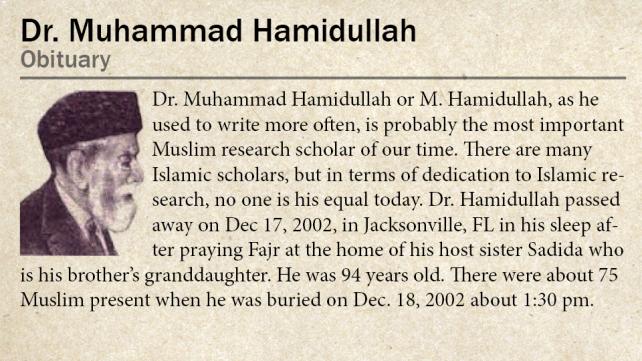
Introduction to Islam: by Dr.Hamidullah اردو کتب

Muhammad Hamidullah (Urduمحمد حمیداللہ‎), (9 February1908 – 17 December 2002) D. Phil.D. Litt.HI, was a MuhaddithFaqih, scholar of Islamic law and an academic author with over 250 books. A prolific writer, his extensive works on Islamic science, history and culture have been published in several languages and many thousands of articles in learned journals. His scholarship is regarded by many as unparalleled in the last century. A double doctorate (D.Phil and D.Litt) and a polymath, he was fluent in 22 languages including Urdu (his mother tongue), Persian, Arabic, French, English, German, Italian, Greek, Turkish, Russian etc. He learned Thai at the age of 84. More >>>>
ڈاکٹر محمد حمید اللہ (پیدائش: 9فروری 1908ء، انتقال : 17 دسمبر 2002ء) معروف محدث، فقیہ، محقق، قانون دان اور اسلامی دانشور تھے اور بین الاقوامی قوانین کے ماہر سمجھے جاتے تھے۔ تاریخ حدیث پر اعلٰی تحقیق، فرانسیسی میں ترجمہ قرآن اور مغرب کے قلب میں ترویج اسلام کا اہم فریضہ نبھانے پر آپ کو عالمگیر شہرت ملی۔ آپ جامعہ عثمانیہ سے ایم۔اے، ایل ایل۔بی کی ڈگریاں حاصل کرنے کے بعد اعلیٰ تعلیم و تحقیق کے لیے یورپ پہنچے۔ بون یونیورسٹی (جرمنی) سے ڈی فل اور سوربون یونیورسٹی (پیرس)سے ڈاکٹریٹ کی ڈگری حاصل کی ۔ -=------

Reconstruction of Religious Thought in Islam

Iqbal as the epitome of the miracles of the Qur'an in the present era : "For me, the greatest manifestation of the miracles of the Qur'an in the present era is the personality of Allama Iqbal." Said , late Dr. Israr Ahmed, describing Allama he says:  In the twentieth century, a person like Allama Iqbal who acquired knowledge at the highest level of the time, who studied the philosophies of the East and the West, who was a comprehensive of both ancient and modern, who went to Germany and England to study philosophy. He was possessed by this Qur'an in such a way that his mind was soothed only by the wise Qur'an and his thirst for knowledge could be quenched only by the Book of Allah.
I only got peace and protection in you !

The worst of creations with Good are those deaf, those dumb who do not use their intellect (Quran;2:18) . "And Allah gives another example: There are two men. One of them is dumb who is unable to do anything, and he is a burden on his master. Wherever he directs him to, he brings no good. Can he be equal to the one who enjoins justice and is on the straight path?"(Quran;16:76)
"And in the alternation of night and day, and in the provision God sends down from the sky, bringing Earth to life by it after it has died, and in the varying direction of the winds, there are Signs for people who use their intellect."(Qur'an, 45:5)
“..he who perished might perish by a clear proof and he who survived might survive by a clear proof “(Quran; 8:42)
مرحوم ڈاکٹر اسرار احمد علامہ اقبالؒ کو عہدِ حاضر میں اعجاز قرآن کا مظہر قرار دیتے ہوئے رقمطراز ہیں: ’’میرے نزدیک عہد حاضر میں قرآن کے اعجاز کا سب سے بڑا مظہر علامہ اقبال کی شخصیت ہے۔ بیسویں صدی میں علامہ اقبال جیسا ایک شخص جس نے وقت کی اعلیٰ ترین سطح پر علم حاصل کیا، جس نے مشرق و مغرب کے فلسفے پڑھ لئے، جو قدیم اور جدید دونوں کا جامع تھا، جو جرمنی اور انگلستان میں جا کر فلسفہ پڑھتا رہا، اُس کو اس قرآن نے اس طرح Possess کیا اور اس پر   اس طرح چھاپ قائم کی کہ اُس کے ذہن کو سکون ملا تو صرف قرآنِ حکیم سے اور اس کی تشنگٔی علم کو آسودگی حاصل ہو سکی تو صرف کتاب اللہ سے گویا بقول خود اُن کے ؎
نہ کہیں جہاں میں اماں ملی، جو اماں ملی تو کہاں ملی: مرے جرم خانہ خراب کو تیرے عفوِ بندہ نواز میں!
قرآن حکیم  اور فکر اقبال
آں کتابِ زندہ، قرآنِ حکیم
حکمتِ او لایزال است و قدیم
نسخۂ اسرارِ تکوینِ حیات
بے ثبات از قوتش گیرد ثبات
حرفِ او را ریب نے، تبدیل نے
آیہ اش شرمندۂ تاویل نے ۱۵؎
(ترجمہ) وہ کتابِ زندہ جسے قرآن حکیم کہتے ہیں ۔اس میں حکمت کی درج باتیں ہمیشہ رہنے والی اور پرانی ہیں ۔ وہ ( قرآن پاک) زندگی کے ہونے یا نہ ہونے کے بھیدوں کا نسخہ ہے۔ بے ثباّت بھی اس کی وجہ سے ثابت قدم ہو جاتا ہے۔اس کے حروف میں نہ کوئی شک ہے اور نہ کوئی تبدیلی ہو سکتی ہے۔اس کی آیاتِ بینات کی کوئی غلط تاویل نہیں ہو سکتی ہے
The Reconstruction of Religious Thought in Islam is a compilation of lectures delivered by Muhammad Iqbal on Islamic philosophy; it was published in 1930. These lectures were delivered by Iqbal in Madras, Hyderabad, and Aligarh. The last chapter, "Is Religion Possible", was added to the book from the 1934 Oxford Edition onwards.

In Reconstruction, Iqbal called for a re-examination of the intellectual foundations of Islamic philosophy. The book is a major work of modern Islamic thought. It was a major influence on Iranian sociologist Ali Shariati and other contemporary Muslim reformers, including Tariq Ramadan.
Quotes from the book
  • To have a succession of identical thoughts and feelings is to have no thoughts and feelings at all. Such is the lot of most Muslim countries today. They are mechanically repeating old values...
  • Space, time, and matter are interpretations which thought puts on the free creative energy of God.
  • If the aim of religion is the spiritualisation of the heart, then it must penetrate the soul of man, and it can best penetrate the inner man . . . We find that when Muhammad Ibn Tumart—the Mahdi of Muslim Spain—who was Berber by nationality, came to power and established the pontifical rule of the Muwahhidun, he ordered for the sake of the illiterate Berbers that the Quran should be translated and read in the Berber language and that the call to prayer should be given in Berber.
  • Such is the attitude of the modern Turk, inspired as he is by the realities of experience, and not by the scholastic reasoning of jurists who lived and thought under different conditions of life. To my mind these arguments, if rightly appreciated, indicate the birth of an International ideal, which forming the very essence of Islam, has been hitherto overshadowed or rather displaced by Arabian Imperialism of the earlier centuries in Islam.
  • The republican form of government is not only thoroughly consistent with the spirit of Islam, but has also become a necessity in view of the new forces that were set free in the world of Islam.
  • The more genuine schools of Sufism have, no doubt, done good work in shaping and directing the evolution of religious experience in Islam; but their latter-day representatives, owing to their ignorance of the modern mind, have become absolutely incapable of receiving any fresh inspiration from modern thought and experience. They are perpetuating methods which were created for generations possessing a cultural outlook differing, in important respects, from our own
  • Hard his lot and frail his being, like a rose leaf, yet no form of reality is so powerful, so inspiring, and so beautiful as the spirit of man.    
   
The Qur’ān is a book which emphasizes ‘deed’ rather than ‘idea’. There are, however, men to whom it is not possible organically to assimilate an alien universe by re-living, as a vital process, that special type of inner experience on which religious faith ultimately rests. Moreover, the modern man, by developing habits of concrete thought– habits which Islam itself fostered at least in the earlier stages of its cultural career– has rendered himself less capable of that experience which he further suspects because of its liability to illusion.  The more genuine schools of Sufism have, no doubt, done good work in shaping and directing the evolution of religious experience in Islam; but their latter-day representatives, owing to their ignorance of the modern mind, have become absolutely incapable of receiving any fresh inspiration from modern thought and experience. They are perpetuating methods which were created for generations possessing a cultural outlook differing, in important respects, from our own. ‘Your creation and resurrection,’ says the Qur’ān, ‘are like the creation and resurrection of a single soul.’ (Quran;31:28).  A living experience of the kind of biological unity, embodied in this verse, requires today a method physiologically less violent and psychologically more suitable to a concrete type of mind. In the absence of such a method the demand for a scientific form of religious knowledge is only natural. In these Lectures, which were undertaken at the request of the Madras Muslim Association and delivered at Madras, Hyderabad, and Aligarh, I have tried to meet, even though partially, this urgent demand by attempting to reconstruct Muslim religious philosophy with due regard to the philosophical traditions of Islam and the more recent developments in the various domains of human knowledge. And the present moment is quite favourable for such an undertaking. Classical Physics has learned to criticize its own foundations. As a result of this criticism the kind of materialism, which it originally necessitated, is rapidly disappearing; and the day is not far off when Religion and Science may discover hitherto unsuspected mutual harmonies. It must, however, be remembered that there is no such thing as finality in philosophical thinking. As knowledge advances and fresh avenues of thought are opened, other views, and probably sounder views than those set forth in these lectures, are possible. Our duty is carefully to watch the progress of human thought, and to maintain an independent critical attitude towards it.

Lectures / Chapters: Download or read online  <<here>> 

For batter understanding, it is strongly recommended to first read Abridged Lectures <<here>>

Reconstruction of Religious Thought in Islam 
By Dr.Muhammad Iqbal

 Available - http://goo.gl/MT7xqL
1.Knowledge and Religious Experienceعلم اور روحانی تجربہ :  
 روحانی تجربہ کے مکشوفات کی عقلی جانچ
تصور خدا اور عبادت کا مفہوم
اسانی نفس اس آزادی اور سرمدیت
5.The Spirit of Muslim Culture     اسلامی ثقافت کی روح
اسلام میں اصول حرکت (اجتہاد)
7. Is Religion Possible?    کیا مذہب ممکن ہے ؟
خطبات اقبال - اسلام میں تفکر کا انداز جدید
ز مَن بر صُوفی و مُلاّ سلامے:  کہ پیغامِ خُدا گُفتَند ما را 
ولے تاویلِ شاں در حیرت اَنداخت: خُدا و جبرئیلؑ و مصطفیؐ را 
میری جانب سے صُوفی ومُلاّ کو سلام پہنچے کہ انہوں نے اللہ تعالیٰ کے احکامات ہم تک پہنچائے، لیکن انہوں نے اُن احکامات کی جو تاویلیں کیں،اُس نے اللہ تعالیٰ، جبرائیل ؑاور محمد مصطفیﷺ کو بھی حیران کر دیا۔(علامہ محمد اقبال)

I extend my greetings, Salaam, to both the Sufis and Mullahs for their efforts in conveying the message of God to us. However, the manner in which they have interpreted these divine commands has left 
Allah, Angel Gabriel, and Muhammad (peace be upon him) perplexed  (Allama Muhammad Iqbal)

رسالة التجديد

علامہ اقبال نے اسلامی فکر کے جمود میں بیداری پیدا کی اور ڈاکٹر برق کے مجربات و محسوسات مزید غور و تفکرانسپائر کرتے ہیں- بیس سال قرآن کے مطالعہ و تحقیق، علماء اور اہل علم لوگوں سے کئی کئی دن پر محیط طویل  تبادلہ خیالات و ای ایکسچینجز کے بعد اہم موضوعات پر حاصل نتائج کا خلاصہ پیش خدمت ہے- مکمل تحقیق اردو اور انگریزی ویب سائٹس اور eBooks میں موجود ہے- مواد (contents) پر توجہ دیں اور زبان کی غلطیوں کو نظر انداز کریں۔ اپنے موجودہ نظریات کو دوران مطالعہ ایک طرف رکھنا ہو گا، فٹ نوٹس پرریفرنس لنکس کو پڑھیں توسوالات کے جوابات مل جائیں گےپھررابطہ بھی کیا جا سکتا ہے-  کوشش کی ہے کہ الله تعالی کا پیغام درست ترین طور پرسمجھ کر پیش کیا جائے-  مگربشری محدودات سے کسی نادانستہ غلطی پراللہ تعالی سےمعافی اوربخشش کا طلبگار-

[بریگیڈیئر آفتاب احمد خان (ر)] ١٢ ربیع الاول ١٤٤٨ ھ /  September 29 2023]


اقبال اور ملا کی تنگ نظری

====================
اسلام ٹائمز: 
’’ملا کا دل کسی غم میں گرفتار نہیں کیونکہ اس کے پاس آنکھ تو ہے، اس میں نمی نہیں۔ اس کے مکتب سے میں اس لیے نکل آیا ہوں کہ اس کے حجاز کی ریت میں کوئی زمزم نہیں ہے۔ منبر پر جب ہو تو اس کا کلام چبھن والا زہریلا ہوتا ہے جبکہ اس کے پاس سینکڑوں کتابیں ہوتی ہیں۔ میں نے شرم کے مارے تیرے سامنے یہ بات نہیں کہی کہ وہ اپنے آپ سے تو چھپا ہوا ہے لیکن ہمارے سامنے آشکار ہے۔‘‘

تحریر: سید ثاقب اکبر

ڈاکٹر خلیفہ عبد الحکیم لکھتے ہیں: ’’علامہ اقبال ایک روز مجھ سے فرمانے لگے کہ اکثر پیشہ ور ملا عملاً اسلام کے منکر، اس کی شریعت سے منحرف اور مادہ پرست دہریہ ہوتے ہیں۔ فرمایا کہ ایک مقدمے کے سلسلے میں ایک مولوی صاحب میرے پاس اکثر آتے تھے۔ مقدمے کی باتوں کے ساتھ ساتھ ہر وقت یہ تلقین ضرور کرتے تھے کہ دیکھیے ڈاکٹر صاحب آپ بھی عالم دین ہیں اور اسلام کی بابت نہایت لطیف باتیں کرتے ہیں لیکن افسوس ہے کہ آپ کی شکل مسلمانوں کی سی نہیں، آپ کے چہرے پر ڈاڑھی نہیں۔ میں اکثر ٹال کر کہہ دیتا کہ ہاں مولوی صاحب آپ سچ فرماتے ہیں۔ یہ ایک کوتاہی ہے، علاوہ اور کوتاہیوں کے۔ ایک روز مولوی صاحب نے تلقین میں ذرا شدت برتی تو میں نے عرض کیا کہ مولوی صاحب آپ کے وعظ سے متاثر ہو کر ہم نے آج ایک فیصلہ کیا ہے۔ آپ میرے پاس اس مقدمے کے سلسلے میں آتے ہیں کہ آپ باپ کے ترکے میں سے اپنی بہن کو زمین کا حصہ نہیں دینا چاہتے اور کہتے ہیں کہ آپ کے ہاں شریعت کے مطابق نہیں بلکہ رواج کے مطابق ترکہ تقسیم ہوتا ہے اور انگریزی عدالتوں نے اس کو تسلیم کر لیا ہے۔ میری بے ریشی کو بھی دینی کوتاہی سمجھ لیجیے لیکن رواج کے مقابلے میں شریعت کو بالائے طاق رکھ دینا اس سے کہیں زیادہ گناہگاری ہے۔ میں نے آج یہ عہد کیا ہے کہ آپ بہن کو شرعی حصہ دے دیں اور میں ڈاڑھی بڑھا لیتا ہوں۔ لائیے ہاتھ، آپ کی بدولت ہماری بھی آج اصلاح ہو جائے۔ اس پر مولوی صاحب دم بخود ہوگئے اور میری طرف ہاتھ نہ بڑھ سکا۔‘‘

علامہ اقبال نے ملا کی اس دو روئی کو یوں بیان کیا ہے:

واعظاں کیں جلوہ بر محراب و منبر می کنند
چوں بہ خلوت می روند آں کار دیگر می کنند
مشکلی دارم ز دانشمند محفل باز پرس
توبہ فرمایاں چرا خود توبہ کمتر می کنند
’’واعظ لوگ جب محراب و منبر پر جلوہ فرما ہوتے ہیں، وہاں جو باتیں کرتے ہیں، خلوت میں جاکر ان کے برخلاف کام کرتے ہیں، میری ایک مشکل ہے، محفل کے دانشمند سے ایک دفع پھر پوچھ کر بتائیں کہ جو لوگ توبہ کرنے کا فرماتے ہیں، وہ خود کمتر توبہ کیوں کرتے ہیں‘‘ اقبال مجھے کئی دنوں سے یاد آرہے تھے، خاص طور پر ان دنوں سے جب مولویوں کے ایک گروہ کے متشدد فہم نے سارے پاکستان کو وحشت و کرب میں مبتلا کر رکھا تھا۔ جب پاکستان میں ایک مطالبے پر جو اپنے مقام پر صحیح بھی ہوسکتا ہے، اس مذہبی طبقے نے عوامی راستوں کو بند کر رکھا تھا، ہر چیز کو توڑ پھوڑ کا نشانہ بنا رہے تھے، ہر مخالف کو یہودی یا یہودی ایجنٹ قرار دے رہے تھے، سرکاری اور نجی املاک کو آگ لگا رہے تھے، یہاں تک کہ بہت سے افراد کو انھوں نے مار مار کر زخمی کر دیا اور بعض تو ان کے تشدد کی تاب نہ لا کر چل بسے۔

اس موقع پر ایسے مذہبی طبقے کی ترجیحات کے حوالے سے ہمارے ایک دوست نے لکھا: ’’سچ بتائیے آپ نے پاکستان میں مولوی صاحبان کی بڑی تعداد کو جان لینے اور دینے کے نعرے لگاتے لگواتے سُنا، کیا کبھی کسی انسانی مسئلے پر بھی اس طبقے نے آواز اٹھائی؟ آپ نے کبھی ناجائز ذخیرہ اندوزی، گراں فروشی، ملاوٹ جیسے مسائل پر مذہبی طبقے کو بات کرتے ہوئے سُنا؟ کیا آپ نے کرپٹ سیاسی نظام، بدتر عدالتی نظام، رشوت پر مبنی پولیس سسٹم کے خلاف کبھی مذہبی جماعتوں کو مظاہرے کی کال دیتے ہوئے سُنا؟ پاکستان میں مذہبی طبقہ صرف "توہین" کے نام پر ہی مرنے مارنے پر ابھارتا ہے، یہ لوگوں کو سیرت نبوی اور اسلامی تعلیمات کی روشنی میں جینا کیوں نہیں سکھاتا!‘‘ ملا اپنی بات کو ثابت کرنے کے لیے ایسی ایسی تاویلیں اور حیلے تراش لیتا ہے کہ عقل انسانی کو حیرت ہوتی ہے، علامہ اقبال نے اس کی بھی نشاندہی کر رکھی ہے:
ز من بر صوفی و ملا سلامی
کہ پیغام خدا گفتند ما را
ولی تأویل شان در حیرت انداخت
خدا و جبرئیل و مصطفیٰ را
میری طرف سے صوفی و ملا پر سلام ہے کہ جو ہمیں اپنی طرف سے خدا کا پیغام سناتے ہیں، لیکن اس پیغام میں وہ ایسی تاویل کرتے ہیں کہ جس پر خدا، جبرئیل اور مصطفیؐ بھی حیرت میں پڑ جاتے ہیں۔

ایک طرف جنھیں ہم کافر کہتے ہیں، انھیں دیکھیں اور دوسری طرف جنھیں ہم اپنا مذہبی راہنماء کہتے ہیں، انھیں دیکھیں تو علامہ اقبال کی یہ بات سچ دکھائی دیتی ہے:
دین کافر فکر و تدبیر و جہاد
دین ملا فی سبیل اللہ فساد
اقبال نے ملا کے مزاج کو ایک اور مقام پر بہ انداز دگر بیان کیا ہے اور ان کے مطابق اس مزاج کا حامل شخص جنت کی فضا میں مطمئن نہیں رہ سکتا۔ چنانچہ کہتے ہیں:
ميں بھی حاضر تھا وہاں، ضبط سخن کر نہ سکا
حق سے جب حضرت ملا کو ملا حکم بہشت
عرض کی ميں نے، الہی! مری تقصير معاف
خوش نہ آئيں گے اسے حور و شراب و لب کشت
نہيں فردوس مقام جدل و قال و اقول
بحث و تکرار اس اللہ کے بندے کی سرشت
ہے بد آموزی اقوام و ملل کام اس کا
اور جنت ميں ن ہمیشہ ملا کی کم نظری، فرقہ پرستی، ظاہر بینی اور خود خواہی کو ہدف تنقید بنایا ہے۔ ملا کے بارے میں ان کا عمومی تاثر یہ ہے کہ اگر وہ مخلص بھی ہو تو دین کے چھلکے سے جڑا ہوتا ہے، حقیقت دین کی اس کو خبر نہیں ہوتی۔ الفاظ و اصطلاحات کے بڑے ذخیرے سے کام لے کر عامۃ الناس سے اپنے آپ کو نمایاں کرنے کے درپے ہوتا ہے۔ علامہ اقبال کہتے ہیں:
قلندر جز دو حرف لا الہ کچھ بھی نہیں رکھتا
فقیہ شہر قاروں ہے لغت ہائے حجازی کا
 افسوس کہ یہ بات صرف مسلمانوں کے مذہبی پیشواؤں پر صادق نہیں آتی بلکہ دنیا بھر کے مذاہب پر ایسے ہی افراد کا قبضہ ہے۔ ایسے کئی واقعات سامنے آتے ہیں، جن کے مطابق بعض افراد کو مسلمان ہونا اس لیے مشکل ہوگیا کہ ملاؤں کے نزدیک ضروری تھا کہ وہ موجود فرقوں میں سے کسی میں شامل ہوں۔ علامہ اقبال نے بھی ایسے بعض واقعات کی نشاندہی کر رکھی ہے۔ دنیا میں جو تیز رفتار تبدیلیاں آئی ہیں اور آرہی ہیں، ملا عام طور پر اس سے نابلد ہیں۔ ان کے بہت سے مسلمات تحقیق کی دنیا میں پادر ہوا ہوچکے ہیں، لیکن وہ آج تک اسی پر ڈٹے ہوئے ہیں۔ وہ اپنے صدیوں پرانے درسی نصاب پر عموماً نگاہ بازگشت کے لیے تیار نہیں ہوتے۔ عالمی حالات، حقائق اور واقعات ہی نہیں انسانیت کے دشمنوں کی تدبیریں اور طریقے بھی ان کی نظروں سے اوجھل رہتے ہیں۔ نئے حقائق کی شناسائی کی تمنا ان کے اندر پیدا ہی نہیں ہوتی۔ وہ اپنے تئیں عقل کل ہی نہیں شیخ الکل فی الکل بھی سمجھتے ہیں، جبکہ ایسا عصر حاضر میں تو بالکل ممکن نہیں ہے۔

علامہ اقبال نے ملا کے بارے میں بہت کچھ کہہ رکھا ہے، ہمارے اس مضمون میں زیادہ گنجائش نہیں ہے۔ قارئین کرام ایک تحقیقی نظر اس سلسلے میں علامہ اقبال کی شاعری کے علاوہ ان کے منثورات و مکتوبات پر بھی ڈالیں۔ ہم آخر میں ان کے چند اشعار پر اپنی بات تمام کرتے ہیں:
دل ملا گرفتار غمی نیست
نگاہی ہست، در چشمش نمی نیست            
از آن بگریختم از مکتب او
کہ در ریگ حجازش زمزمی نیست          
سر منبر کلامش نیش دار است
کہ او را صد کتاب اندر کنار است           
حضور تو من از خجلت نہ گفتم
ز خود پنہان و بر ما آشکار است
’’ملا کا دل کسی غم میں گرفتار نہیں کیونکہ اس کے پاس آنکھ تو ہے اس میں نمی نہیں۔ اس کے مکتب سے میں اس لیے نکل آیا ہوں کہ اس کے حجاز کی ریت میں کوئی زمزم نہیں ہے۔ منبر پر جب ہو تو اس کا کلام چبھن والا زہریلا ہوتا ہے جبکہ اس کے پاس سینکڑوں کتابیں ہوتی ہیں۔ میں نے شرم کے مارے تیرے سامنے یہ بات نہیں کہی کہ وہ اپنے آپ سے تو چھپا ہوا ہے لیکن ہمارے سامنے آشکار
~~~~~~~~~~~~

قرآن کو چھوڑنے والے بدترین علماء 

وَعَنْ عَلِیِّ رَضِیَ اﷲُعَنْہُ قَالَ قَالَ رَسُوْلُ اﷲِ صَلَّی اﷲُ عَلَیْہٖ وَسَلَّمَ یُوْشِکُ اَنْ یَّاْتِیَ عَلَی النَّاسِ زَمَانٌ لَا یَبْقَی مِنَ الْاِسْلَامِ اِلَّا اسْمُہۤ وَلَا یَبْقٰی مِنَ الْقُرْاٰنِ اِلَّا رَسْمُہ، مَسَاجِدُ ھُمْ عَامِرَۃٌ وَھِیَ خَرَابٌ مِنَ الْھُدٰی عُلَمَآءُ ھُمْ شَرُّ مَنْ تَحْتَ اٰدِیْمِ السْمَآءِ مِنْ عِنْدِھِمْ تَخْرُجُ الْفِتْنَۃُ وَفِیْھِمْ تَعُوْدُ۔ (رواہ البیہقی فی شعب الایمان)

" اور حضرت علی المرتضیٰ رضی اللہ تعالیٰ عنہ راوی ہیں کہ سرکار دو عالم صلی اللہ علیہ وسلم نے ارشاد فرمایا۔ عنقریب لوگوں پر ایک ایسا وقت آئے گا کہ اسلام میں صرف اس کا نام باقی رہ جائے گا اور قرآن میں سے صرف اس کے نقوش باقی رہیں گے۔ ان کی مسجدیں (بظاہر تو) آباد ہوں گی مگر حقیقت میں ہدایت سے خالی ہوں گی۔ ان کے علماء آسمان کے نیچے کی مخلوق میں سے سب سے بدتر ہوں گے۔ انہیں سے (ظالموں کی حمایت و مدد کی وجہ سے ) دین میں فتنہ پیدا ہوگا اور انہیں میں لوٹ آئے گا (یعنی انہیں پر ظالم) مسلط کر دیئے جائیں گے۔" (بیہقی)

یہ حدیث اس زمانہ کی نشان دہی کر رہی ہے جب عالم میں اسلام تو موجود رہے گا مگر مسلمانوں کے دل اسلام کی حقیقی روح سے خالی ہوں گے، کہنے کے لئے تو وہ مسلمان کہلائیں گے مگر اسلام کا جو حقیقی مدعا اور منشاء ہے اس سے کو سوں دور ہوں گے۔ قرآن جو مسلمانوں کے لئے ایک مستقل ضابطۂ حیات اور نظام علم ہے اور اس کا ایک ایک لفظ مسلمانوں کی دینی و دنیاوی زندگی کے لئے راہ نما ہے۔ صرف برکت کے لئے پڑھنے کی ایک کتاب ہو کر رہ جائے گا۔ چنانچہ یہاں " رسم قرآن" سے مراد یہی ہے کہ تجوید و قرأت سے قرآن پڑھا جائے گا، مگر اس کے معنی و مفہوم سے ذہن قطعاً نا آشنا ہوں گے، اس کے اوامر و نواہی پر عمل بھی ہوگا مگر قلوب اخلاص کی دولت سے محروم ہوں گے۔
مسجدیں کثرت سے ہوں گی اور آباد بھی ہوں گی مگر وہ آباد اس شکل سے ہوں گی کہ مسلمان مسجدوں میں آئیں گے اور جمع ہوں گے لیکن عبادت خداوندی، ذکر اللہ اور درس و تدریس جو بناء مسجد کا اصل مقصد ہے وہ پوری طرح حاصل نہیں ہوگا۔
اسی طرح وہ علماء جو اپنے آپ کو روحانی اور دنی پیشوا کہلائیں گے۔ اپنے فرائض منصبی سے ہٹ کر مذہب کے نام پر امت میں تفرقے پیدا کریں گے، ظالموں اور جابروں کی مدد و حمایت کریں گے۔ اس طرح دین میں فتنہ و فساد کا بیج بو کر اپنے ذاتی اغراض کی تکمیل کریں گے۔ (مشکوۃ شریف ۔ جلد اول ۔ علم کا بیان ۔ حدیث 263)
افتراق کی سبب دو چیزیں ہیں، عہدہ کی محبت یا مال کی محبت۔ سیدنا کعب بن مالک انصاری رضی اللہ تعالیٰ عنہ اپنے والد سے روایت کرتے ہیں کہ رسول اللہ  ﷺ نے فرمایا:
”ماذئبان جائعان أرسلا في غنم بأفسد لھا من حرص المرء علی المال و الشرف لدینہ” دو بھوکے بھیڑئیے ، بکریوں کے ریوڑ میں چھوڑ دیئے جائیں تو وہ اتنا نقصان نہیں کرتے جتنا مال اور عہدہ کی حرص کرنے والا اپنے دین کے لئے نقصان دہ ہے۔   (الترمذی:۲۳۷۶ وھو حسن)
مجھے اپنی امت پر گمراہ اماموں کا خوف ہے​
مجھے اپنی امت کی بابت دجال سے بھی زیادہ ایک چیز کا ڈر ہے​ گمراہ اماموں کا!
سیدنا ابوذر رضی اللہ عنہ کہتے ہیں میں رسول اللہ صلی اللہ علیہ وسلم کے ساتھ چل رہا تھا- آپ صلی اللہ علیہ وسلم نے فرمایا : مجھے اپنی امت کی بابت دجال سے بھی زیادہ ایک چیز کا ڈر ہے. آپ صلی اللہ علیہ وسلم نے تین بار یہی بات ارشاد فرمائی- سیدنا ابور ذر رضی اللہ تعالٰی عنہ کہتے ہیں- میں نے پوچھا : اے اللہ کے رسول ! صلی اللہ علیہ وسلم آپ کو اپنی امت کی بابت دجال سے بھی زیادہ کس چیز کا خوف ہے- فرمایا : گمراہ اماموں کا [البانی رحمہ اللہ ،'' سلسلة الأحاديث الصحيحة " (1582) ، (1989)''بيان تلبيس الجهمية " (2/293) ]  [الراوي : أبو ذر الغفاري | المحدث : الهيثمي | المصدر : مجمع الزوائد، الصفحة أو الرقم: 5/2411 ]

 رسول اللہ صلی اللہ علیہ وسلم نے فرمایا : '' میں اپنی امت پر گمراہ کن اماموں سے ڈرتا ہوں '' [ الترمذي،2229  صحیح]
۱؎ ، نیز فرمایا : '' میری امت کی ایک جماعت ہمیشہ حق پر غالب رہے گی ، ان کی مدد نہ کرنے والے انہیں کوئی نقصان نہیں پہنچا سکیں گے یہاں تک کہ اللہ کا حکم (قیامت) آجائے ''۔ [امام ترمذی کہتے ہیں : ۱- یہ حدیث حسن صحیح ہے]
آپ صلی اللہ علیہ وسلم نے فرمایا ” مجھے اپنی امت پر گمراہ اماموں کا خوف ہے ۔ ''[سنن أبي داؤد 4252  ماخوز]
 صلی اللہ علیہ وسلم نے ارشاد فرمایا : " مجھے تم لوگوں (حاضرین ) پر دجال کے علاوہ دیگر (جہنم کی طرف بلانے والوں ) کا زیادہ خوف ہے اگر وہ نکلتا ہے اور میں تمھارے درمیان موجود ہوں تو تمھاری طرف سے اس کے خلاف (اس کی تکذیب کے لیے ) دلائل دینے والا میں ہوں گا اور اگر وہ نکلا اور میں موجود نہ ہوا تو ہر آدمی اپنی طرف سے حجت قائم کرنے والا خود ہو گا اور اللہ ہر مسلمان پر میرا خلیفہ (خود نگہبان ) ہوگا ۔ [صحيح مسلم 7373 ماخوز]
نبی صلی اللہ علیہ وسلم نے سچ فرمایا :"میں اپنی امت پر گمراہ کن اماموں سے ڈرتاہوں"-  دوسرے فرقوں کے بانی جن کی وجہ سے امت تفرقہ کا شکار ہوئی. گمراہ آئمہ سے مراد وہ لوگ ہیں جو دین کے نام پر لوگوں کی قیادت کرتے ہیں، اس میں فاسد حکام اور گمراہ علماء شامل ہیں. ان کا دعوی یہ ہوتا ہے کہ وہ شریعت کی طرف بلارہے ہیں حقیقت میں شریعت کے سب سے زیادہ مخالف ہوتے ہیں [القول المفيد على كتاب التوحيد " (1/365)]
گمراہ امام یعنی شر کے امام [شيخ ابن عثيمين رحمه الله ] 
گمراہ اماموں سے امراء مراد ہیں " مجموع الفتاوى" (1/355) .
( گمراہ امام ) یعنی جو مخلوق کو بدعت کی طرف بلائیں " [سندي نے " حاشية ابن ماجة " (2/465)]


Read online
    Videos on Iqbal http://www.youtube.com/user/DISNAChannel#p/p
    ~~~~~~~~~~~~~~~~~~~~
    Over 100, Theosophical:Videos


    The difference between human and animals is the 'intellect', the ability to learn and reason; the capacity for knowledge and understanding.
    The debate on heart or brain to be the centre of intellect is very old. The cardiocentric model of Aristotle [384–322 B.C.E] went against the ...
    Throughout the Quran, the narratives engage with its audience appealing to make use of their intellect and reason (Arabic: Aql) "Indeed, the ...

      Humanity, ReligionCultureSciencePeace
      Twitter: Peace_Forum
      FB: peaceforum.net